Split Fiction Review
The Bottom Line
Hazelight's sci-fi and fantasy mashup is the most inventive co-op game we've ever played, but I still like it Takes Two more.
Two writers, one very bad machine
I played Split Fiction with the greatest and worst co-op partner of all time, my brother. Co-op is actually the only way anyone can play it since there is no solo mode (unless you do some hacky 2 controller stuff). No single player mode, no AI partner, no option to solo it later. Hazelight has now made three games and all three of them require another human being sitting there with you and I kinda love it.
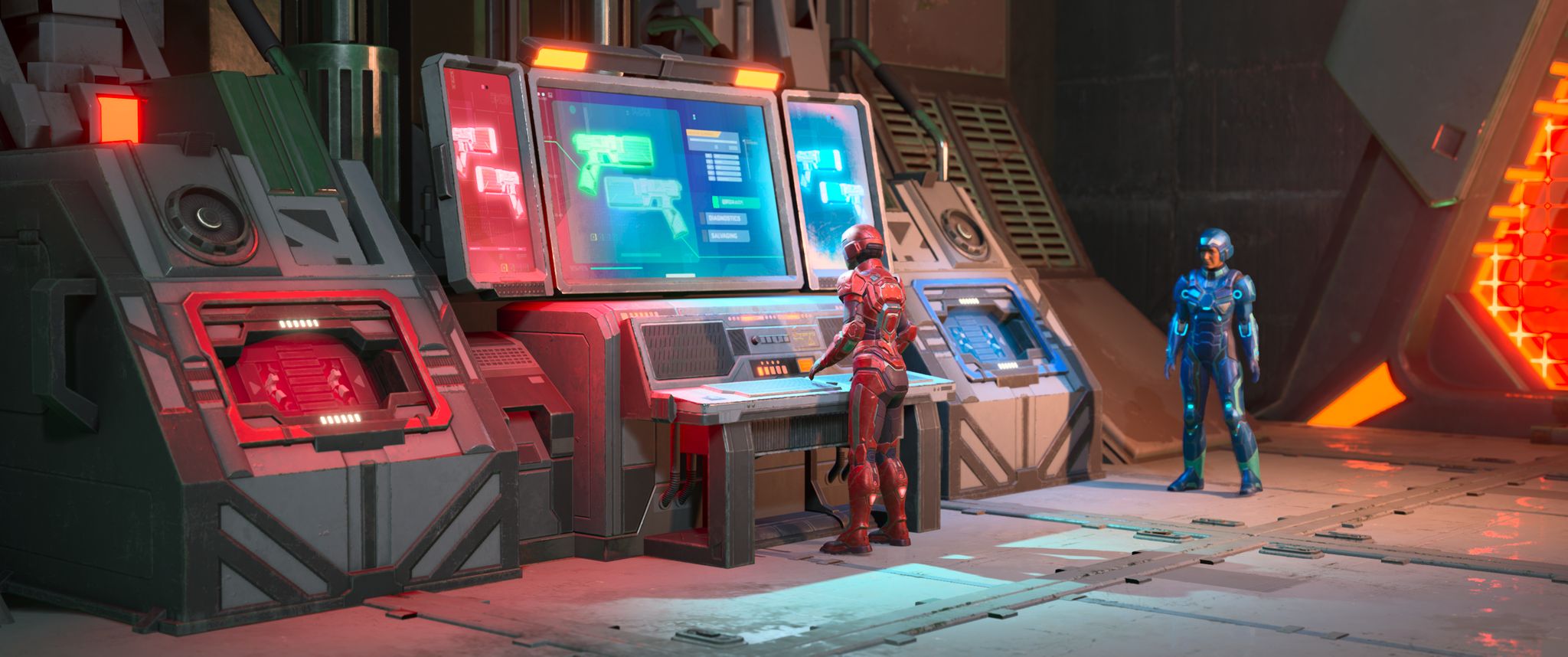
You play as Mio and Zoe, two unpublished writers invited to Rader Publishing for what sounds like a career break. Mio writes cold, hard sci-fi and acts like it. Zoe writes bright high fantasy and talks like it. They are opposites in the way that only two characters in a story about opposites can be. The company straps them into a machine that renders their own writing into playable worlds, and it turns out the CEO is harvesting their ideas to mass produce content. You and your partner get stuck bouncing between a neon cyberpunk dystopia and a dragon-filled fantasy realm with the machine glitching around them. There are also some other surprise worlds along the way if you are willing to explore and find them.
No two tricks are alike
The overall game structure is seven chapters that alternate between Mio's sci-fi and Zoe's fantasy, and the reinvention rate is absurd. In Neon Revenge you are cyber ninjas with asymmetric powers. Mio gets a katana that lets her run on walls and flip gravity, Zoe gets a gravity whip that yanks objects and platforms around. In Rise of the Dragon Realm you each get a dragon egg and raise the thing over the course of the level, starting with a glide and an ivy grab and ending with you both scaling a massive dragon named Megalith like it is an MMO raid boss.
In between those you get a snowboarding race, a high speed motorcycle chase, a twin-stick shooter section inside a mech fortress, a level that flips to 3D side-scrolling, and a stretch where you are two pigs. That is all I'm saying about the pig sequence and won't spoil it, but it's safe to say it's one of the most unique endings to a sequence I've experienced.
Every one of these levels are polished like they are the main event and nothing feels like filler or a tech demo the team bolted on and moved past.
The side stories kept us coming back
There are 12 optional side stories tucked into the chapters, three each across four of the main levels. You might as well skip this game if you aren't planning on playing through them. They are self-contained detours into a scrap of Mio or Zoe's writing and are typically short, but so sweet.
There is also a story reason to do them, they are part of the ideas Rader is stealing. Going out of your way to play them all feels less like achievement hunting and more like refusing to let a company take somebody's work. My brother and I cleaned up every single one.
I'll just give you a small taste without too many spoilers one of the side stories, and I promise this is real, has you playing as teeth navigating a birthday cake before ending up in a dentist's office. Sounds weird, it is and it's amazing. The others are equally interesting and I can't gush about them enough.
So why do I still like It Takes Two more
Here is where I break from the consensus a little. Critically, Split Fiction is Hazelight's best reviewed game and a lot of outlets flatly call it the studio's finest hour. Mechanically I might even agree. It is bigger, harder, more ambitious, more polished, and has better boss designs.
But, to me, it's missing something.
It Takes Two was about a marriage falling apart, and you played couples therapy as a platformer, with two people who had actual history and actual hurt between them. Split Fiction is about two strangers becoming friends while a tech CEO steals their manuscripts. I cared about Cody and May (It Takes Two) from the beginning of the game until the very end and got choked up a bit. Mio and Zoe are just fine, yes fine is the word I would use.
The second thing is a smaller gripe, but really gave It Takes Two the edge for me and it was the fact that it had roughly 25 little competitive minigames scattered through it you could play against your partner. Games like chess, tug of war, whack-a-mole, and more that my brother and I burned an embarrassing number of hours talking trash to each other over them. Split Fiction doesn't have that, focused more on side stories which are amazing, no argument, but they are cooperative levels, not two partners trying to gain the edge after working together so much. That competitive needling was half of what made It Takes Two a hangout game for us and Split Fiction never gives you the chance.
Should you play it
Obviously yes. This is one of the best co-op games ever made and it's not too long running about 14 to 20 hours depending on how many side stories you chase. The Friend's Pass means only one of you has to buy it, which continues to be the most generous thing in the genre. Checkpoints are frequent enough that neither of us ever got frustrated.
An overall 8 from me, but I fully understand the people calling it a 9 or a 10. It is more inventive than It Takes Two, but that emotional pull was never quite there.
Pros
- Reinvents itself constantly and every idea is polished like it is the main attraction
- Brilliant side stories that tie to the story (in a roundabout way)
- Friend's Pass means one copy covers both players
- Gorgeous art style that holds together across wildly different worlds
- The finale does something with the split screen that belongs in the all-timer conversation
Cons
- Very little emotional connection to the characters
- No competitive minigames which are half the fun in co-op games
- It gets self-serious in a game that is funnier when it is being silly
Screenshots
Game data provided by RAWG
Related Reviews

Comments
No comments yet. Be the first to comment.